The Hearsay Trap: Why Screenshots Can Struggle in Court
The "Hearsay" Trap: Why Your Screenshots May Face Objections in Family Court
Picture this. You are in a courtroom and important issues are on the line. You have printed screenshots of messages you believe are important, and you feel ready.
Then opposing counsel stands up:
"Objection. Hearsay. Lack of foundation."
What happens next depends on the judge, the rules of your jurisdiction, and how well your attorney is prepared to respond. Objections to text message evidence are common, and screenshots can be an easy target.
Why Screenshots Draw Objections
A screenshot is a picture of a screen at one moment. Under the Federal Rules of Evidence and their state equivalents, text messages often raise two separate questions:
1. Authentication (FRE 901): Can you show the message is what you claim, for example that it came from the person you say sent it? Screenshots are easy to fabricate or edit, and courts know it. Authentication is usually established through testimony, circumstantial details, records, or other evidence.
2. Hearsay (FRE 801–803): Is the message being offered to prove what it says is true? Depending on the facts, exceptions or exclusions may apply, such as statements by an opposing party. This is a legal argument for your attorney.
Screenshots also tend to lack context. They show a fragment, often without the full date, and leave out the messages before and after.
""A screenshot shows what was on a screen. On its own, it says little about who sent a message, when, or whether anything is missing.""
Originals, Context, and Documentation
Courts generally prefer original records, or accurate duplicates, and complete context over fragments. For WhatsApp, the chat export is a reasonable starting point: a text file containing each message with its date, time, and sender name as the export records them.
What a raw export lacks is organization and documentation. That is the gap ScanMyChat fills.
How ScanMyChat Helps You Prepare
You don't necessarily need a forensic expert just to organize a chat you already have. (If authenticity is seriously disputed, one may be worth it. Ask your attorney.) ScanMyChat turns your WhatsApp export into an organized Evidence Package:
Three separate things: ScanMyChat helps with organization and documentation. Authentication is shown through evidence such as testimony. Admissibility is the judge's call under your jurisdiction's rules. Talk to an attorney about what your court requires.
Your Privacy (Local Processing)
Your legal matter is private. ScanMyChat runs locally in your browser.
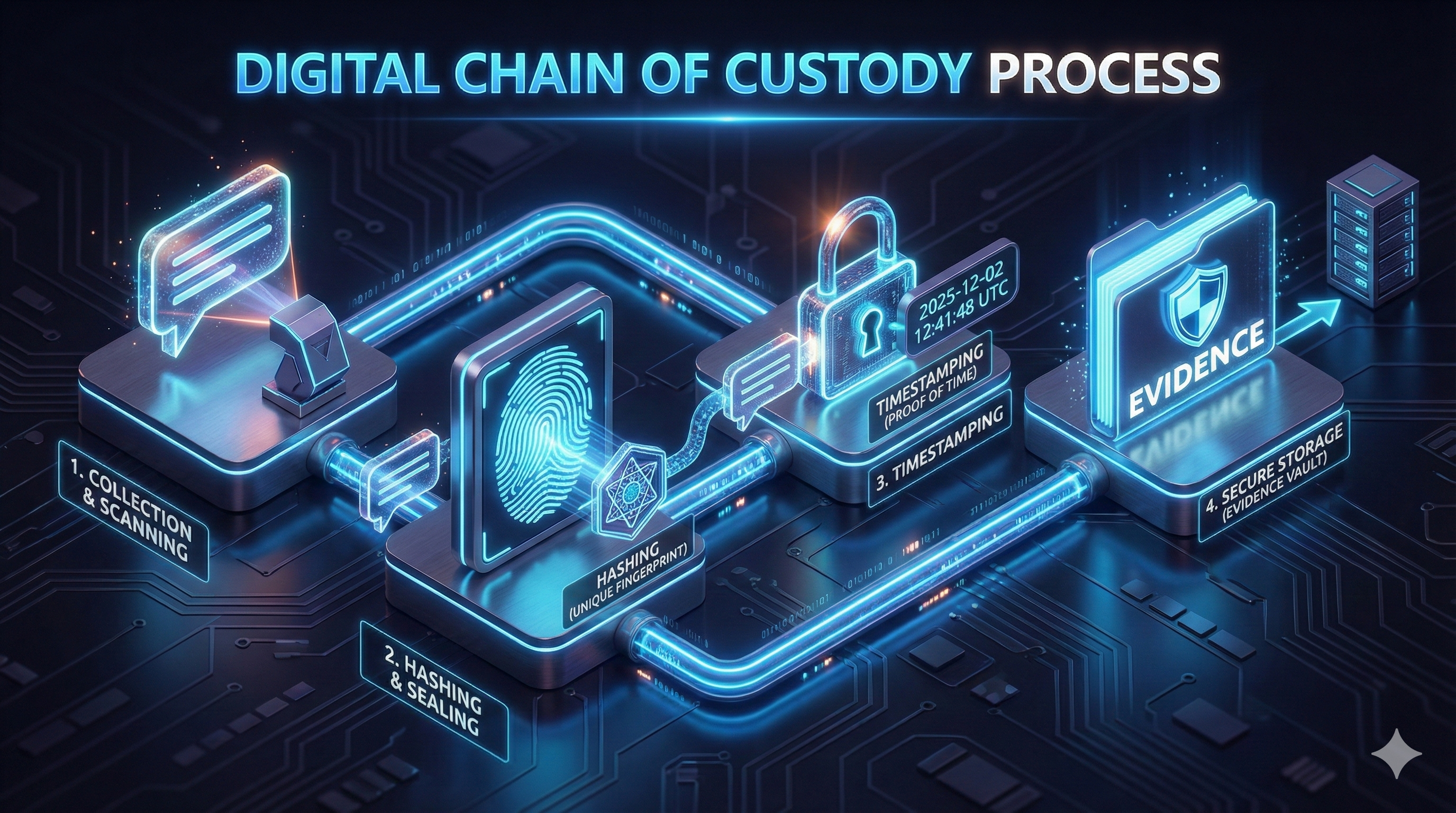
Digital Chain of Custody Process
Preparation Makes the Difference
Objections are part of litigation. The better organized and documented your records are, the easier it is for your attorney to respond.
Organize your messages. Prepare with your attorney.
---
Disclaimer: This article is for informational purposes only and does not constitute legal advice. Rules on authentication, hearsay, and admissibility vary by state and jurisdiction. Always consult a qualified attorney about your specific case.
Legal Disclaimer
This article is for informational purposes only and does not constitute legal advice. Always consult with a qualified attorney regarding your specific case. ScanMyChat is evidence-preparation software, not legal counsel.